
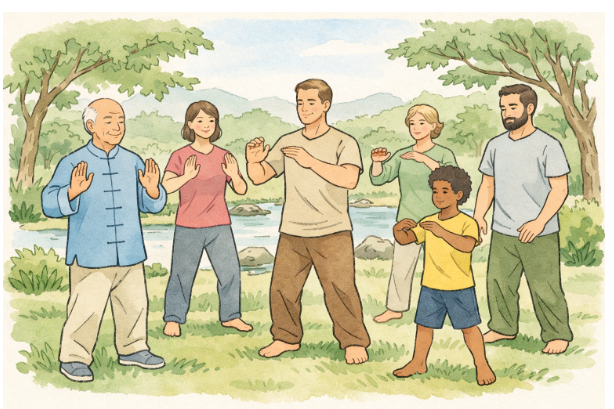
Qigong, an ancient Chinese practice, skillfully blends gentle movements, conscious breathwork, and mindful awareness to support both physical and mental well-being. Whether you are seeking to reduce stress or enhance your sense of balance, incorporating easy Qigong movements into your daily routine can have transformative effects. Many individuals find that even a brief daily practice can lead to profound physical improvements and inner calm. For those looking for more structured guidance, exploring virtual tai chi classes for beginners can be a helpful and accessible way to get started from home.
Qigong’s beauty lies in its accessibility. This gentle, adaptable practice accommodates every age and fitness level, requiring no complex equipment or formal setting. Emerging research supports Qigong’s value for boosting energy, improving posture, and calming anxious thoughts, showing its effectiveness alongside other mindful fitness routines.
Stepping into a Qigong routine can be as simple as learning a few foundational techniques and finding a quiet place to practice. You do not need any experience in martial arts or meditation to benefit, and each movement can be tailored to your own abilities and comfort level.
After even a short time spent exploring basic Qigong exercises, most people notice steadier balance, gentler mood swings, and a greater capacity for relaxation.
What Is Qigong?
Qigong (pronounced “chee-gung”) is rooted in Chinese tradition and incorporates a holistic approach to body and mind. The practice integrates postures, breathing techniques, and mental focus to cultivate, circulate, and harmonize the body’s intrinsic energy, or “qi.” For centuries, Qigong has played an important role in health maintenance, fitness, and stress management among practitioners in East Asia and, more recently, worldwide.
Benefits of Qigong
Scientific studies and centuries of anecdotal evidence highlight a wide range of health perks from regular Qigong practice. The benefits include:
- Improved Balance and Coordination: Purposeful, slow movements boost proprioception and body stability, making Qigong ideal for fall prevention in older adults.
- Stress Relief: Mindful breathing techniques help ease anxiety and restore a sense of calm through gentle rhythmic movement.
- Enhanced Circulation: Flowing exercises stimulate healthy blood flow and support vital organ health.
- Lowered Blood Pressure: Research shows Qigong variations such as Baduanjin may help decrease blood pressure and support cardiovascular health. For more on this, see the article from Healthline.
Simple Qigong Exercises
The following beginner-friendly Qigong movements can be performed at home without any equipment or previous experience:
1. Rubbing and Massaging the Ears
How it helps: This technique helps balance kidney energy, boosts willpower, and alleviates feelings of fear and anxiety.
Instructions: Gently rub the entire ear for 30–60 seconds, moving from top to bottom, including the earlobe. Use your thumb and index finger to softly massage the outer ear. If you find sensitive spots, spend a moment gently massaging them. Next, place the index and middle fingers on either side of the ear to form a “V,” and carefully rub the front and back of the ear up and down simultaneously.
2. Tapping in the Center of the Chest
How it helps: Tapping on the sternum releases emotional tension and encourages expansive breathing by reducing chest tightness.
Instructions: Form a “chick fist” by softly curling your hand. Gently tap in a small, circular motion over the sternum and where the ribs meet the sternum for 30–60 seconds. Move your wrist freely, maintaining a light, pleasurable rhythm. Choose clockwise or counterclockwise movement according to how you feel – clockwise for weakness and counterclockwise for congestion.
3. Massage of the Sternum and Ribs
How it helps: This massage calms the body, reduces chest discomfort, and enhances the energetic flow in the chest region.
Instructions: Using either a soft fist or your fingertips, gently massage from the center of the chest along the ribs outwards in small, soothing circles. Gradually increase pressure if comfortable, but avoid pain or discomfort.
4. Massage of the Nail Corners
How it helps: Vitalizes both body and mind, particularly helpful for breaking through feelings of fatigue or mental stagnation by stimulating Qi circulation along the meridians.
Instructions: Locate the indentations at the base of each fingernail with your thumb and index finger. Gently press and massage these points until a slight pressure or mild discomfort is felt. Then, roll your fingers to distribute energy along every nail bed.
5. Gentle Waist Stretch
How it helps: Encourages grounding and supports connected breathing, promoting flow along the body’s key energy channels, especially the gallbladder and small intestine meridians.
Instructions: Stand with your feet shoulder-width apart or sit upright, keeping your back away from the chair. Place your pelvis in a relaxed, slightly tucked position and lengthen your head toward the ceiling as you breathe deeply. Focus on relaxing the back and neck with each breath.
Incorporating Qigong into Daily Life
Bringing Qigong into your daily routine does not require a dramatic lifestyle change. Here are some practical strategies for building a sustainable habit:
- Set a Regular Practice Time: Choose mornings to set a positive tone for the day, or evenings to promote relaxation and rest.
- Create a Comfortable Space: A quiet, uncluttered area with room to move is ideal for practice.
- Start Small: Begin with just 10–15 minutes, increasing gradually as you develop confidence and awareness.
- Honor Your Body’s Signals: Move gently and respect your physical limits, adapting exercises if needed.
Conclusion
Integrating gentle Qigong activities into your daily routine offers long-term rewards for physical poise, mental clarity, and emotional harmony. The simplicity of Qigong makes it an accessible wellness path for people at every stage of life, and its practices are grounded in centuries of tradition. Whether you follow online classes or self-guide your practice at home, Qigong offers measurable benefits for anyone seeking a sustainable approach to well-being.
