
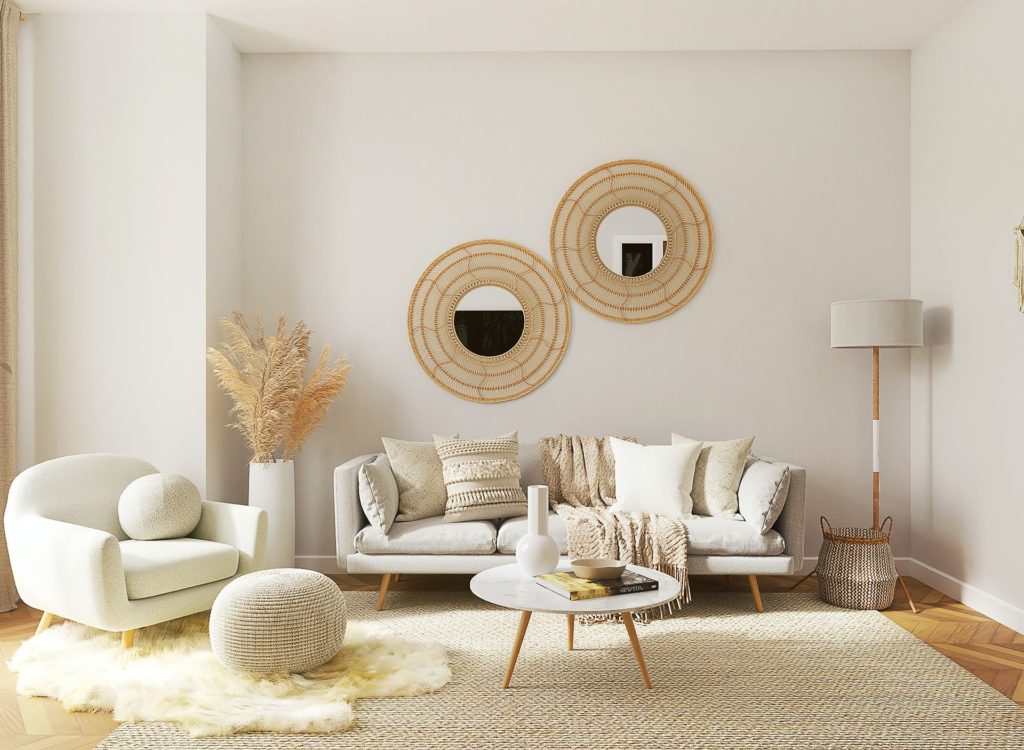
For years, the dominant conversation in interior design centered on color — the right shade of white, the boldest accent wall, the most strategic pop of contrast. That conversation is shifting. Texture has quietly moved from a supporting detail to a primary design driver, reshaping how residential and commercial spaces communicate mood, identity, and intention.
This is not a passing trend. It reflects a deeper change in how people relate to the spaces around them — and what they expect those spaces to deliver.
From Flat to Tactile: A Design Philosophy Shift
Minimalism dominated the design landscape for over a decade. Clean lines, stripped surfaces, and uninterrupted planes defined what modern looked like. The result was visually calm — but for many people, ultimately cold. Spaces felt efficient without feeling alive.
Tactile design fills that gap. When surfaces carry depth — whether through woven textiles, rough stone cladding, ribbed millwork, or textured glass — they create sensory engagement that flat surfaces cannot. A room that rewards a closer look holds attention differently than one that reveals itself entirely from the doorway.
Interior designers increasingly treat texture as a tool for controlling experience. A rough wall slows a person down. A smooth reflective ceiling opens upward. A surface that diffuses light rather than transmitting it directly introduces softness without changing the color palette at all.
The Role of Light Diffusion in Spatial Design
One of the most underutilized principles in interior design is controlling light diffusion. Most discussions about light focus on the source — natural versus artificial, warm versus cool, the placement of fixtures. Far fewer conversations address what happens when light passes through or reflects a surface before it reaches the eye.
Textured surfaces that scatter and soften incoming light change the entire atmosphere of a room. Instead of harsh, directional streams, light becomes ambient. This has practical implications: spaces feel less clinical; contrast is reduced, and the visual weight of a room shifts.
This is particularly relevant in transitional spaces — hallways, stairwells, bathrooms, office partitions — where a hard division between environments benefits from something that mediates rather than separates. Incorporating Customizable Rain Glass into these
transitions is one-way designers achieve both privacy and luminosity without sacrificing one for the other. The vertical pattern diffuses light while maintaining brightness, making spaces feel open rather than enclosed.
Privacy Without Barrier
One of the persistent design challenges in both residential and commercial projects is privacy that does not feel punitive. A solid wall solves privacy but creates isolation. Clear glass solves openness but eliminates seclusion. Most solutions land somewhere uncomfortable in between.
Textured materials — particularly those that obscure without blocking — solve this in an elegant way. They allow light to travel, maintain a visual connection to adjacent spaces, and signal separation without constructing a hard psychological divide. This is why textured glass has become a preferred choice for conference room partitions, shower enclosures, cabinet doors, and residential entryways.
The design principle here extends beyond glass. Perforated screens, slatted wood panels, layered sheer fabrics — each operates on the same logic. Partial transparency changes how occupants experience a space without removing their sense of connection to it.
Texture as a Branding Tool in Commercial Spaces
In commercial interiors, texture has taken on a strategic role beyond aesthetics. Retailers, hospitality brands, and office designers now treat surface texture as part of how a space communicates identity.
A textured partition in a hotel lobby signals craftsmanship. A patterned glass wall in a boutique retail environment creates an impression of detail and intentionality. A reception area with layered material finishes suggests stability and care — qualities that matter to clients and customers before a single conversation takes place.
This is not a decorative thinking. It is an experiential strategy. The physical environment shapes perception, and texture is one of the most immediate and subconscious cues people respond to. Brands investing in commercial interiors are increasingly aware that smooth and generic do not leave an impression.
Choosing Texture Purposefully
Not every textured surface serves every space. The most effective use of texture in design comes from matching the character of the material to the intended experience of the room.
Heavy, directional texture — stone, ribbed wood, embossed metal — works well in spaces meant to feel grounded or permanent. Lighter, more fluid textures — woven fibers, glass patterns, translucent layers — suit spaces that should feel open, soft, or transitional.
Scale matters too. A subtle texture reads differently in a tight hallway than in a double- height lobby. Texture that disappears at normal viewing distance does little; texture that overwhelms a small room does too much. The design challenge is calibration.
The Practical Case for Textured Materials
Beyond aesthetics, textured surfaces often offer functional advantages. They can reduce glare, mask surface wear over time, diffuse sound, and create visual interest that reduces the need for additional decorative elements. In high-traffic commercial spaces, especially materials that look intentional while performing a functional role, represent a strong value proposition.
As design moves further toward experience-driven thinking — spaces that feel as much as they look — texture will continue to gain ground. It is one of the few design tools that works simultaneously on the visual, tactile, and atmospheric level, making spaces that stay with the people who pass through them.

At Engrnewswire, we are passionate about helping brands grow through smart SEO, GEO, and AEO strategies, supported by High-quality backlinks. With over 2k+ contributor accounts worldwide. We ensure your content reaches the right audience while building lasting authority.