
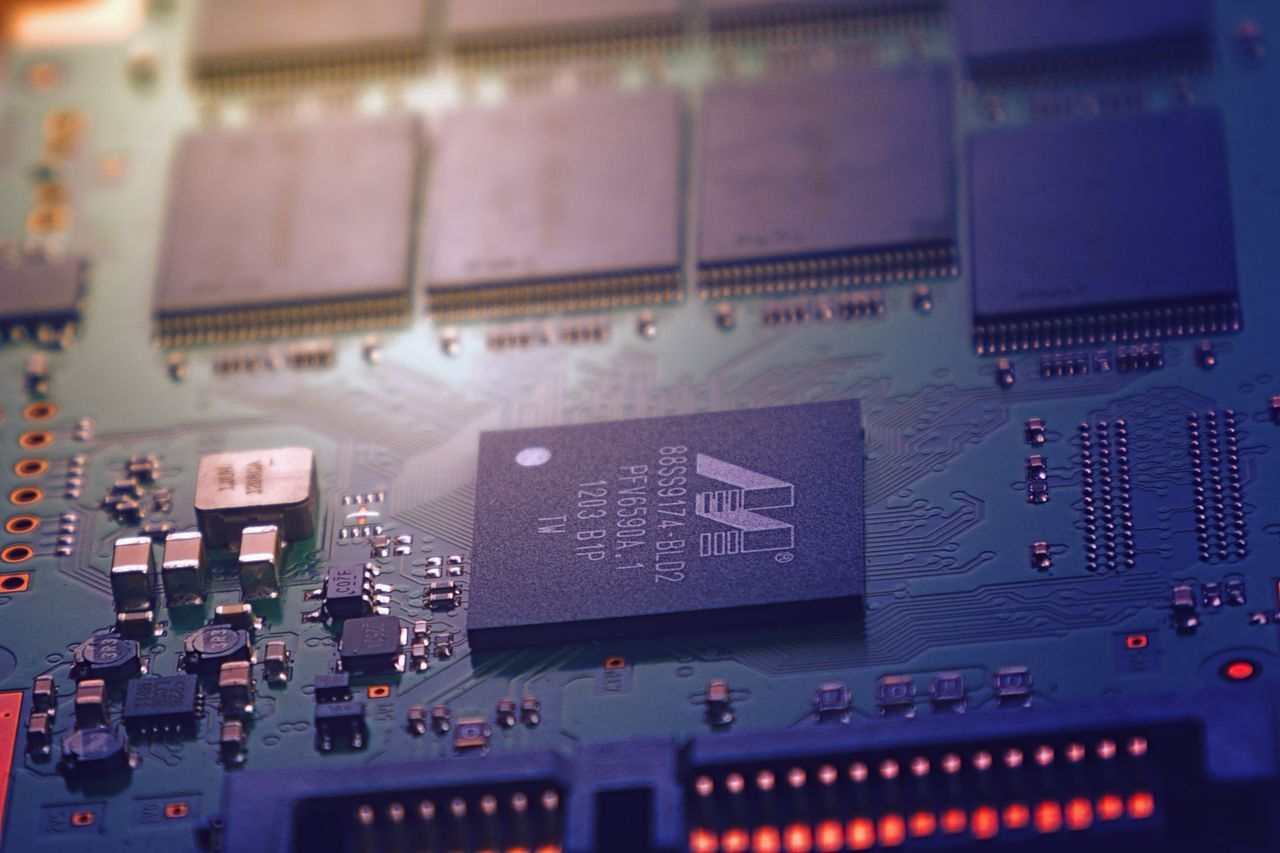
The technology sector has long been driven by the relentless march of Moore’s Law, the observation that the number of transistors on a microchip doubles approximately every two years, delivering predictable improvements in computing power that have fueled decades of innovation. But the physical limits of classical silicon-based computing are becoming increasingly apparent, and the industry is looking to quantum computing as one of the most promising paths beyond those limits. Quantum computing does not simply do what classical computers do but faster; it operates on entirely different principles that make it uniquely suited to solving categories of problems that are fundamentally intractable for classical systems. The technology sector, which both develops and relies on advanced computing capabilities, is being shaken up by quantum computing in ways that are beginning to reshape research priorities, product development roadmaps, competitive dynamics, and workforce requirements across the industry.
Accelerating Drug Discovery and Materials Science
One of the most significant near-term applications of quantum computing in the technology and science sectors is the simulation of molecular and chemical systems with a level of accuracy that classical computers simply cannot achieve at meaningful scales. The behavior of molecules at the quantum level is governed by quantum mechanical principles, which means that classical computers must use approximations that introduce errors as the molecular systems being modeled grow in complexity. Quantum computers can model these systems natively, using their quantum mechanical properties to simulate quantum mechanical reality in ways that are fundamentally more accurate. For technology companies invested in drug discovery, materials science, battery technology, and semiconductor design, this capability represents the potential to dramatically accelerate the research and development process and to discover solutions that would never be found through classical simulation methods alone.
Transforming Artificial Intelligence and Machine Learning
Artificial intelligence and machine learning are already transforming the technology sector, but their capabilities are constrained by the computational resources available to train models, process data, and run inference at scale. Quantum machine learning algorithms have the theoretical potential to offer exponential speedups for specific tasks including optimization of neural network parameters, sampling from complex probability distributions, and pattern recognition in high-dimensional datasets. While practical quantum machine learning is still in relatively early stages, technology companies are investing heavily in quantum AI research because the potential advantages are significant enough to justify substantial exploration. The convergence of quantum computing and artificial intelligence could ultimately produce systems capable of solving problems that neither technology could address independently, opening up entirely new categories of application across every sector that relies on AI. For technology companies, building quantum AI capability now is increasingly seen as a strategic imperative rather than an academic curiosity.
Revolutionizing Cryptography and Cybersecurity
The cryptographic systems that protect the technology sector’s most sensitive data, communications, intellectual property, and infrastructure are largely based on mathematical problems that quantum computers will eventually be capable of solving far more efficiently than any classical system. This quantum threat to existing encryption is one of the most consequential near-term implications of quantum computing for the technology industry and is driving an urgent global effort to develop and deploy post-quantum cryptographic standards. At the same time, quantum computing also enables entirely new approaches to cryptography, including quantum key distribution, which uses the fundamental properties of quantum mechanics to create communication channels that are theoretically impossible to intercept without detection. Technology companies that get ahead of the transition to quantum-safe security infrastructure will be better protected against future threats and better positioned to offer their clients and customers the highest levels of data protection. The intersection of quantum computing and cybersecurity is one of the most active and consequential research and development areas in the entire field.
Enabling Next-Generation Software Development
As quantum hardware advances, the demand for software tools that make quantum computing accessible to a broader range of developers and organizations is growing rapidly. Classical software development methodologies do not translate directly to the quantum domain, where algorithms must be designed around the specific properties and constraints of quantum hardware including qubit coherence times, error rates, and gate fidelity. Specialized platforms for quantum software development are emerging that allow developers to design, test, and optimize quantum circuits without requiring deep expertise in quantum physics. Accessing powerful quantum computing software through leading platforms is enabling a new generation of quantum software developers and researchers to build practical quantum applications far more efficiently than was possible just a few years ago. The growth of the quantum software ecosystem is one of the critical enabling factors that will determine how quickly quantum computing delivers practical value across the technology sector and beyond.
Reshaping Competitive Dynamics and Talent Requirements
The emergence of quantum computing is creating new competitive dynamics within the technology sector, with organizations that invest early in quantum capabilities potentially gaining advantages in specific application areas that will be difficult for later movers to close. Large technology companies, specialized quantum hardware startups, cloud providers, and national laboratories are all investing aggressively in quantum research and development, creating a competitive landscape that is evolving rapidly. The demand for professionals with expertise in quantum computing, including quantum algorithm developers, quantum hardware engineers, and quantum software architects, is growing far faster than the current supply, creating significant talent scarcity that is itself reshaping how companies recruit, train, and retain technical talent. Universities and training organizations are racing to build quantum computing curricula, and technology companies are increasingly investing in internal quantum education programs. The organizations that build strong quantum talent pipelines now will have a significant structural advantage as the technology matures and quantum-enabled applications begin to deliver competitive differentiation.
Conclusion
Quantum computing is shaking up the technology sector across multiple dimensions simultaneously, from the acceleration of scientific discovery and the transformation of artificial intelligence to the urgent challenge of quantum-safe security and the emergence of an entirely new software development paradigm. Technology companies that engage seriously with quantum computing now, building expertise, forming strategic partnerships, and beginning to develop quantum-enabled products and capabilities, will be best positioned to lead in the quantum era. The disruption that quantum computing represents is not a future event to be monitored from a distance; it is an unfolding reality that demands active engagement today.
READ ALSO: How Technology Is Making Communication More Accessible
