

Extreme summer heat can push a home cooling system to its limits, especially when hot afternoons and warm nights continue for days. A few preventive steps can improve comfort, control energy use, and help reduce the risk of an inconvenient breakdown. For homeowners who need local support, professional air conditioning repair and installation in St George UT, can be an important part of a safe, well-prepared heat-season plan.
Cooling preparedness is about more than the air conditioner itself. Airflow, insulation, window coverings, thermostat habits, and an emergency backup plan all affect how livable a house feels when temperatures rise. Start early, pay attention to changes in performance, and avoid waiting for the hottest day of the year to discover a problem.
Why Extreme Heat Puts More Pressure on a Home
During a long heat wave, an air conditioner may run for extended periods to maintain the temperature set on the thermostat. That does not automatically mean the system is failing. However, heat also enters through sun-facing windows, attic spaces, exterior walls, doors, and small gaps around utility lines. The more heat entering the house, the harder the system must work.
Watch for changes such as rooms that no longer cool evenly, bills that rise far beyond normal summer use, repeated starts and stops, or indoor temperatures that creep upward. These signs may indicate airflow restrictions, insulation problems, thermostat issues, or equipment needing attention.
Start With a Pre-Heat Cooling Check
Complete this basic checklist before a stretch of severe weather arrives:
- Replace or clean the air filter according to its type, condition, and manufacturer’s instructions.
- Make sure supply vents and return grilles are open and not blocked by furniture, rugs, or storage.
- Remove grass clippings, leaves, dust, and loose debris from around the outdoor unit.
- Check accessible refrigerant-line insulation for visible damage or missing sections.
- Test the thermostat and replace batteries if the model uses them.
- Arrange a professional inspection if the system has not had seasonal service recently.
Improve Airflow Around the Home
Airflow problems are a common reason one bedroom feels much warmer than the rest of the home. Keep curtains, bookcases, bins, and large furniture away from return vents, which pull household air back toward the system. Closing too many vents can also create pressure issues, so avoid using closed registers as the main strategy for cooling unused rooms.
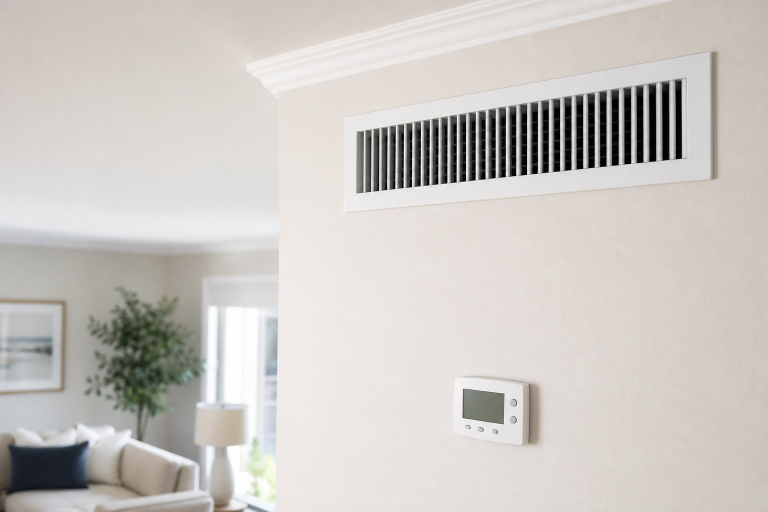
If accessible flexible ducts in an attic, basement, or crawlspace appear sharply bent, disconnected, or crushed, note the issue for a qualified technician. Homeowners can safely clear obstructions and report visible concerns, but they should not alter ducts near wiring, refrigerant lines, or mechanical equipment without proper training.
Keep Heat From Entering Through Windows and Doors
Reducing heat gain is often one of the most affordable ways to improve indoor comfort. Close blinds, shades, shutters, or curtains during the sunniest hours, especially on west- and south-facing windows. Add weatherstripping where doors or windows have noticeable drafts, and seal small exterior gaps around cable lines or utility openings where appropriate.
If upstairs rooms are consistently hotter, inspect attic insulation and ventilation conditions. Exterior shade from trees, awnings, or properly placed shade structures can also limit direct sunlight before it reaches the glass. The EPA’s extreme heat guidance offers additional home-preparation and safety recommendations for periods of dangerous heat.
Use the Thermostat Wisely
Setting a thermostat far below the desired indoor temperature does not usually make a standard system cool faster. It simply keeps the equipment running longer. Make moderate adjustments and give the home time to respond. A programmable or smart thermostat can help households with predictable schedules, but comfort and safety should always come first for vulnerable residents and pets.
Thermostat placement matters, too. A thermostat exposed to direct sunlight, warm lamps, or heat-producing appliances may inaccurately sense the room temperature and cause unnecessary cycling.
Watch for Warning Signs
- Warm air is blowing from the supply vents.
- Weak, reduced, or uneven airflow between rooms.
- Buzzing, grinding, rattling, squealing, or other new noises.
- Water near the indoor unit, drain line, or air handler.
- Ice on refrigerant lines or the indoor coil area.
- Short cycling, meaning frequent starts and stops.
- A sharp rise in electricity use without a meaningful change in household routines.
Know What Homeowners Can Safely Do
Replacing filters, clearing vents, checking thermostat settings, and removing debris around an outdoor unit are generally appropriate homeowner tasks. Do not open electrical panels, handle refrigerant, bypass safety controls, or attempt major mechanical repairs. Turn the system off and seek professional help if you notice burning odors, smoke, exposed wiring, or loud mechanical noises.
Prepare for a Cooling System Failure
- Identify the coolest room in the home and keep it clear for use during an emergency.
- Keep drinking water, essential medications, phone chargers, flashlights, and batteries available.
- Know the location and hours of nearby cooling centers, libraries, or community facilities.
- Check on older relatives, neighbors, young children, and pets during prolonged heat.
- Be ready to leave if indoor temperatures become unsafe or if someone develops heat-related symptoms.
Reduce Cooling Costs Without Sacrificing Safety
Use ovens, dryers, and other heat-producing appliances during cooler parts of the day when possible. Ceiling fans can improve comfort by moving air across the skin, but they do not lower room temperature and should be turned off when rooms are empty. Compare energy use across several billing periods rather than judging performance by a single unusually hot month.
Higher temperatures can increase both household cooling demand and utility costs. Recent CBS News reporting on summer cooling costs also highlights the value of gradual thermostat adjustments, window shading, and maintaining equipment.
When Repair Makes More Sense Than Replacement
System age alone should not determine whether to repair or replace equipment. Consider the diagnosis, repair cost, history of breakdowns, overall condition, efficiency, comfort concerns, refrigerant availability, and whether the equipment is correctly sized for the home. Request a clear explanation of the problem before approving major work, particularly if repairs have become frequent.
Common Questions About Home Cooling in 2026
How Often Should an Air Filter Be Changed?
Check it monthly during heavy cooling periods. Actual replacement timing depends on filter type, pets, dust, allergies, occupancy, and system use.
Why Is One Room Always Hotter Than the Others?
Common causes include direct sunlight, insulation gaps, blocked vents, duct leaks, poor return airflow, or an improperly sized system.
Is It Normal for an Air Conditioner to Run Constantly During a Heat Wave?
Long cycles can be normal in extreme conditions. Constant operation, warm air, weak airflow, unusual sounds, or rising indoor temperatures warrant prompt attention.
Can Fans Replace Air Conditioning During Extreme Heat?
Fans can make people feel cooler, but they do not cool the air like an air conditioner. Do not rely on a fan alone when indoor temperatures become dangerously high.
Final 2026 Cooling Checklist
- Clean or replace the filter.
- Clear the outdoor unit and check vents.
- Block strong sunlight and seal obvious drafts.
- Test the thermostat and monitor warning signs.
- Prepare for outages, heat emergencies, and system failures.
- Arrange professional service whenever safety or cooling performance is in doubt.
Conclusion
A comfortable home during extreme heat depends on a complete approach, not just the cooling unit. Regular maintenance, unrestricted airflow, reduced indoor heat gain, sensible thermostat settings, and a clear backup plan can help protect comfort, energy use, and household safety throughout the 2026 cooling season.
