
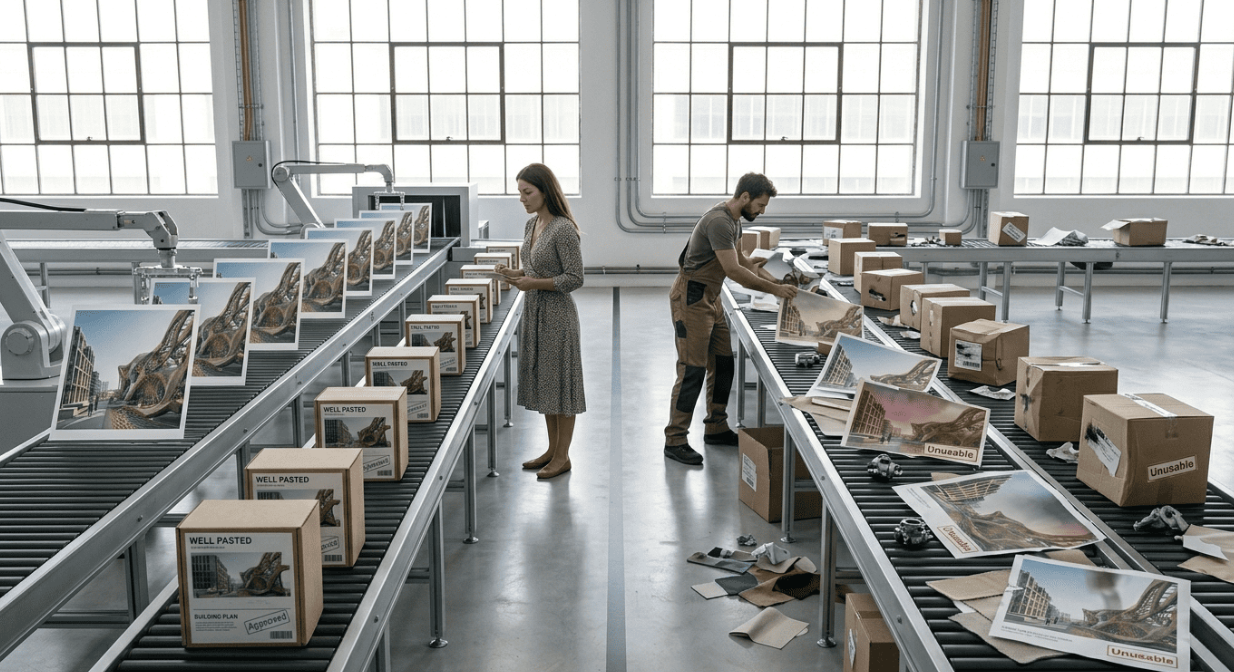
Creating one great image is easy. Creating ten that feel like they belong together is where things get difficult. That’s the real challenge most teams face.
Consistency is what turns visuals into a recognizable style. It’s what makes a campaign feel connected instead of scattered. And it’s often the hardest thing to maintain when using AI tools.
When comparing Higgsfield AI and DreamStudio, the question is not just about quality. It’s about how reliably each tool can produce results that stay aligned across multiple outputs.
Why consistency matters more than individual quality
A single strong visual can grab attention, but consistency builds recognition.
For teams working on campaigns, branding, or ongoing content, consistency means:
- Similar visual style across outputs
- Stable character appearance
- Predictable composition
- Reusable visual direction
Without this, content can feel disconnected. And when content feels inconsistent, audiences notice, even if they don’t consciously realize why.
That’s why many teams are shifting their focus. Instead of asking, “Does this image look good?” they’re asking, “Does this image belong with the rest?”
How Higgsfield AI is built for stable results
Tools like Higgsfield AI are designed to support repeatable output. With an ai image generator, teams can create visuals that maintain alignment across multiple generations. This directly supports Consistency.
Instead of treating each image as a completely new creation, the workflow allows users to build on previous outputs and maintain a consistent direction.
That means when you generate five or ten visuals, they don’t feel like separate ideas. They feel like parts of the same system. For teams running campaigns, this is a big shift. It reduces the need to “fix” visuals after they are created.
What DreamStudio focuses on
DreamStudio is built as a user-friendly interface for Stable Diffusion models.
It is commonly used for:
- Generating images from prompts
- Experimenting with styles
- Adjusting parameters
- Exploring creative outputs
DreamStudio gives users more control over how images are generated. You can adjust settings, change prompts, and experiment with different results.
This flexibility is powerful, especially for creative exploration.
But it also introduces variability. Each output can feel slightly different, even with similar prompts. For some use cases, that’s helpful. For others, it creates extra work.
Predictability vs creative variation
One of the key differences between these tools lies in predictability.
Higgsfield AI focuses on producing outputs that stay aligned with the intended direction. DreamStudio allows more variation, which can be useful for exploration but less reliable for consistent results.
This creates a trade-off:
- Predictable output → better for campaigns
- Variable output → better for experimentation
If your goal is to explore ideas, variation helps.
If your goal is to produce content at scale, predictability becomes more important.
Maintaining style across multiple images
When creating a series of visuals, maintaining style is critical. Think about a campaign where multiple posts need to feel connected. The colors, lighting, and composition should feel like they belong together.
Higgsfield AI allows users to generate visuals that follow a consistent visual direction within the same ai image generator workflow.
DreamStudio can generate multiple images, but maintaining the same style often requires careful prompt tuning and repeated adjustments.
Over time, this difference affects how much effort is required.
Consistency in character and subject representation
Another challenge is keeping characters or subjects consistent.
In many campaigns, especially those involving storytelling, the same character appears across multiple visuals. If that character looks different in each image, the story breaks. Higgsfield AI supports continuity in how subjects appear across outputs.
DreamStudio can achieve similar results, but it usually requires:
- Precise prompts
- Repeated testing
- Manual adjustments
For long-term projects, this adds complexity.
Reducing variability in outputs
Variability is useful when exploring ideas, but it becomes a problem when consistency is required. Higgsfield AI reduces unnecessary variation by focusing on stable output. DreamStudio introduces variation by design, which is part of its creative strength. But in production workflows, variability often leads to extra work.
Teams may need to:
- Regenerate images
- Adjust prompts
- Edit outputs
That extra effort can slow things down.
Workflow impact of consistent results
Consistency doesn’t just improve visuals. It improves workflows.
When outputs are consistent:
- Teams spend less time fixing differences
- Fewer revisions are needed
- Production becomes faster
An ai image generator that produces stable results allows teams to focus more on ideas and less on corrections.
This is where Higgsfield AI fits better into content production workflows.
Adapting consistent visuals across platforms
Content rarely stays in one place.
A campaign might include:
- Social media posts
- Website banners
- Ads
- Email visuals
Consistency helps ensure that visuals feel connected across all these platforms. Higgsfield AI allows teams to generate variations that still feel aligned.
DreamStudio can create variations, but keeping them aligned often requires additional effort. For multi-platform campaigns, this difference becomes noticeable.
Learning from consistent output patterns
Consistency also helps teams learn what works.
When visuals follow a stable pattern, it becomes easier to identify which elements perform well. An ai image generator that supports consistent output makes it easier to refine strategies over time.
Many teams also explore visual consistency strategies to maintain alignment across campaigns. When the tool supports consistency, these strategies become easier to apply.
Long-term impact on brand identity
Consistency is not just about short-term campaigns. It plays a big role in building long-term brand identity.
When visuals remain consistent over time:
- Brands become more recognizable
- Audiences build familiarity
- Content feels more professional
Inconsistent visuals can weaken this effect. Higgsfield AI supports long-term consistency by making it easier to produce aligned visuals. DreamStudio supports creativity, but maintaining long-term consistency requires more effort.
When each tool is the better choice
The right tool depends on what you need.
Higgsfield AI works better when:
- You need consistent visuals
- You are running campaigns
- You want predictable output
- You focus on production
DreamStudio works better when:
- You want to explore different styles
- You need flexibility
- You enjoy experimentation
- You are testing ideas
Both tools are powerful, but they serve different purposes.
Balancing control and reliability
Creative tools often balance two things:
- Control over output
- Reliability of results
Higgsfield AI leans toward reliability. DreamStudio leans toward control and variation. The right balance depends on your workflow and priorities.
Final thoughts
Consistency is what turns individual images into a cohesive visual system. Higgsfield AI and DreamStudio approach this challenge in different ways. DreamStudio offers flexibility and creative exploration.
Higgsfield AI image generator focuses on producing stable, repeatable results that fit into real workflows. Consistency is not just about visual quality. It’s about how well outputs align over time. For teams that need predictable, campaign-ready visuals, Higgsfield AI offers a more practical solution. For those who value experimentation and variation, DreamStudio remains a strong option.
In the end, the best choice depends on whether you prioritize reliability or creative flexibility in your workflow.
