
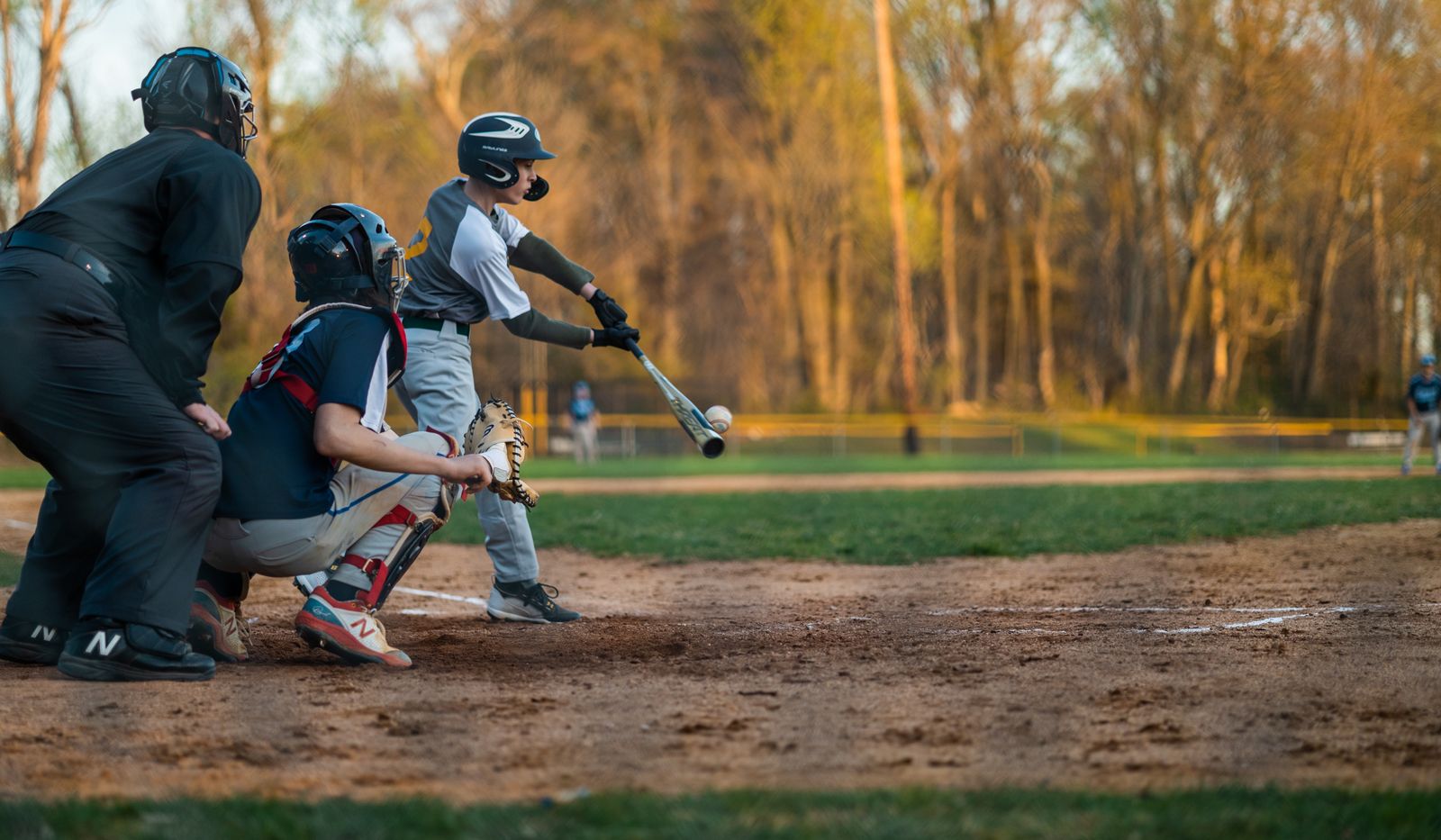
The hardest thing to do in sports is most often said to be hitting a baseball, but there is no single correct answer. It depends on how you define “hardest”: the shortest reaction window, the lowest success rate, the greatest mental pressure, or the biggest physical cost. Hitting a fast pitch wins on reaction time. Other strong contenders include saving a penalty kick, sinking a clutch free throw, and holding a lead in a championship game.
This article looks at the main candidates, explains the science behind why they are so difficult, and offers a simple scoring framework so you can settle the debate for your own favourite sport.
How to Define “Hardest”
People use the word in different ways, so the arguments often talk past each other. Four criteria cover most cases:
- Time pressure. How little time does the athlete have to see, decide and act?
- Failure rate. How often do even the best performers fail?
- Mental load. How much does fear, expectation or fatigue interfere with execution?
- Physical cost. How much strength, endurance or risk of injury is involved?
Judge any candidate against all four and the winner changes depending on which criterion you weight most heavily. That is why the same question produces different answers at every sports bar.
The Case for Hitting a Baseball
Hitting a pitched baseball is the answer most often given. A popular science explainer argues that there are few areas of life where you can fail seven times out of ten and still be considered great. That is the failure-rate argument in one line: a hitter who succeeds 30 percent of the time is an everyday major leaguer, and one who reaches 40 percent would be historic.
The time pressure is extreme. Other sources commonly cited put the reaction window for a 90-plus mph fastball at well under half a second, and the pitch may curve, drop or change speed along the way. The hitter must read the pitch, decide whether to swing and start the swing before the ball arrives, then hit a round ball with a round bat. Even a tiny timing error produces a weak hit or a miss.
Other Strong Contenders
| Feat | Why it is hard | Main difficulty |
|---|---|---|
| Saving a penalty kick | The goalkeeper must guess or react in a fraction of a second to a shot from close range | Time pressure |
| Clutch free throw | A routine skill performed under stadium noise and game-deciding pressure | Mental load |
| Golf hole-in-one | A tiny target from a long distance with wind, terrain and nerves | Low probability |
| Rushing 2,000 yards in an NFL season | A season of repeated punishment, blocking dependence and injury risk | Physical cost and consistency |
| Boxing or ice hockey at elite level | Speed, contact and fatigue combined | Physical cost |
| Staying healthy across a season | Injury risk grows with every game played | Durability |
One list from a sports outlet makes the durability point with a statistic, noting that only six players have rushed for 2,000 yards in an NFL season since 1973. Rare feats like this show how much consistency and luck matter alongside talent.
The Mental Side of Difficulty
Many athletes and coaches argue that the toughest part of sport is mental. Skills that look automatic in practice can fall apart under pressure, and the same free throw feels different with the score tied and seconds left. Common mental challenges include:
- Choking and overthinking. Focusing on the mechanics of a well-learned skill can disrupt it.
- Handling failure. Baseball hitters, goalkeepers and kickers must shake off mistakes immediately.
- Expectation. The better you are, the more people expect from you, which raises the pressure further.
- Recovery from injury. Returning from a long layoff tests patience and confidence as much as fitness.
Mental skills such as visualisation, breathing routines and pre-shot habits are trainable, which is why elite teams employ sports psychologists. Even recreational athletes benefit from simple routines, a point echoed in our guides on fun family challenges that build skill and confidence and evidence-based strategies for long-term fitness habits.
A Simple Scoring Framework
To settle the debate yourself, score each feat from 1 to 5 on the four criteria and add them up. Here is an example of how three candidates might look, using our own rough judgement rather than measured data:
| Feat | Time | Failure | Mental | Physical | Total |
|---|---|---|---|---|---|
| Hitting a fastball | 5 | 5 | 4 | 2 | 16 |
| Saving a penalty kick | 5 | 4 | 4 | 2 | 15 |
| Rushing 2,000 yards | 2 | 3 | 3 | 5 | 13 |
Your numbers may differ, and that is fine. The point is to make the reasoning visible instead of arguing from loyalty to one sport.
Why Casual Fans Underestimate Difficulty
Professionals make hard things look easy. A fastball arrives and the batter simply meets it. A goalkeeper dives the right way. Because the best players are so smooth, spectators assume the skill is simple, and amateurs discover how difficult it is only when they try. If you have ever swung at a pitching machine on a medium setting, you already know how quickly your confidence fades.
Context also matters. A skill may be hard in the abstract, but the hardest version is performing it at the highest level, repeatedly, with a season or title on the line. A hole-in-one is hard for everyone, yet a three-foot putt to win a major is hard in a different, more psychological way.
Sport-by-Sport Snapshots
Every sport has its own candidate for the toughest single act. A few examples show how differently difficulty can appear:
- Baseball. Beyond hitting, catching and fielding require split-second reads, and pitchers must repeat a precise motion hundreds of times a game. The sport rewards patience and punishes impatience.
- Soccer. Scoring from open play is difficult because goals are rare, defenders are close, and a single touch can decide the match. Goalkeepers face the opposite problem: they must stay concentrated for long periods and then act perfectly in an instant.
- Basketball. Shooting is a repeatable skill, yet defenders, fatigue and noise change the conditions every possession. Late-game free throws strip away all the movement and leave pure nerve.
- Golf. There is no opponent interfering with your shot, which makes errors feel entirely personal. A tiny swing flaw can send the ball well off line, and the course never lets you repeat the same shot twice.
- Gymnastics and diving. Athletes perform complex rotations in a few seconds, and landing or entry errors are scored immediately. The margin between perfect and failed is very small.
- Endurance sports. Marathons, triathlons and cycling stage races test pacing, nutrition and mental resilience over hours rather than seconds.
Comparing these makes the original question clearer. A sprinter, a goalkeeper and a marathon runner are all doing something very hard, but the difficulty is of different kinds. Rather than crowning a single winner, it may be more useful to ask which type of difficulty you personally find most impressive: speed, precision, endurance, courage or composure.
If you coach or play, you can turn the debate into practice. Choose the skill you find hardest, list the reasons it is difficult, and build drills that attack one reason at a time. For example, a hitter can use slower pitches to work on timing before moving to faster speeds, and a goalkeeper can rehearse penalties with a coach who varies the shot patterns. Progress in hard skills is usually slow and uneven, so track results over weeks, not days.
Frequently Asked Questions
What is the hardest thing to do in sports?
Hitting a pitched baseball is the most frequently cited answer because of the short reaction time and the low success rate of even the best hitters. It is an opinion rather than a measured fact.
Is there a scientific way to rank the hardest skills?
Not definitively. Researchers can measure reaction time, accuracy and success rates, but “hardest” mixes physical, mental and emotional factors that cannot be reduced to one number.
Why is hitting a baseball so hard?
The ball arrives in a fraction of a second, can move in several directions, and must be struck with a thin round bat. Even the best hitters fail most of the time.
Is the mental side harder than the physical side?
Many athletes say yes at the top level, because every competitor is physically gifted and the difference often comes down to composure. The physical side still matters greatly in endurance sports and contact sports.
What is the hardest sport overall?
There is no agreed answer. Boxing, ice hockey, gymnastics, rugby and triathlon are frequently nominated, depending on whether you value skill, contact, endurance or flexibility.
How can I get better at a hard skill?
Break the skill into parts, practise with deliberate repetition, simulate pressure in training, and build a short pre-performance routine. Work with a coach when possible.
Conclusion
If you must pick a single answer, hitting a baseball has the strongest claim thanks to its tiny reaction window and punishing failure rate. But the best answer is that “hardest” depends on what you measure. Use the four-criteria framework, score your favourite feats, and enjoy the debate.

Sarah Wilson is a versatile writer who covers a wide range of topics, with a strong specialty in entertainment. She delivers engaging, insightful content focused on movies, celebrities, trends, and pop culture.