
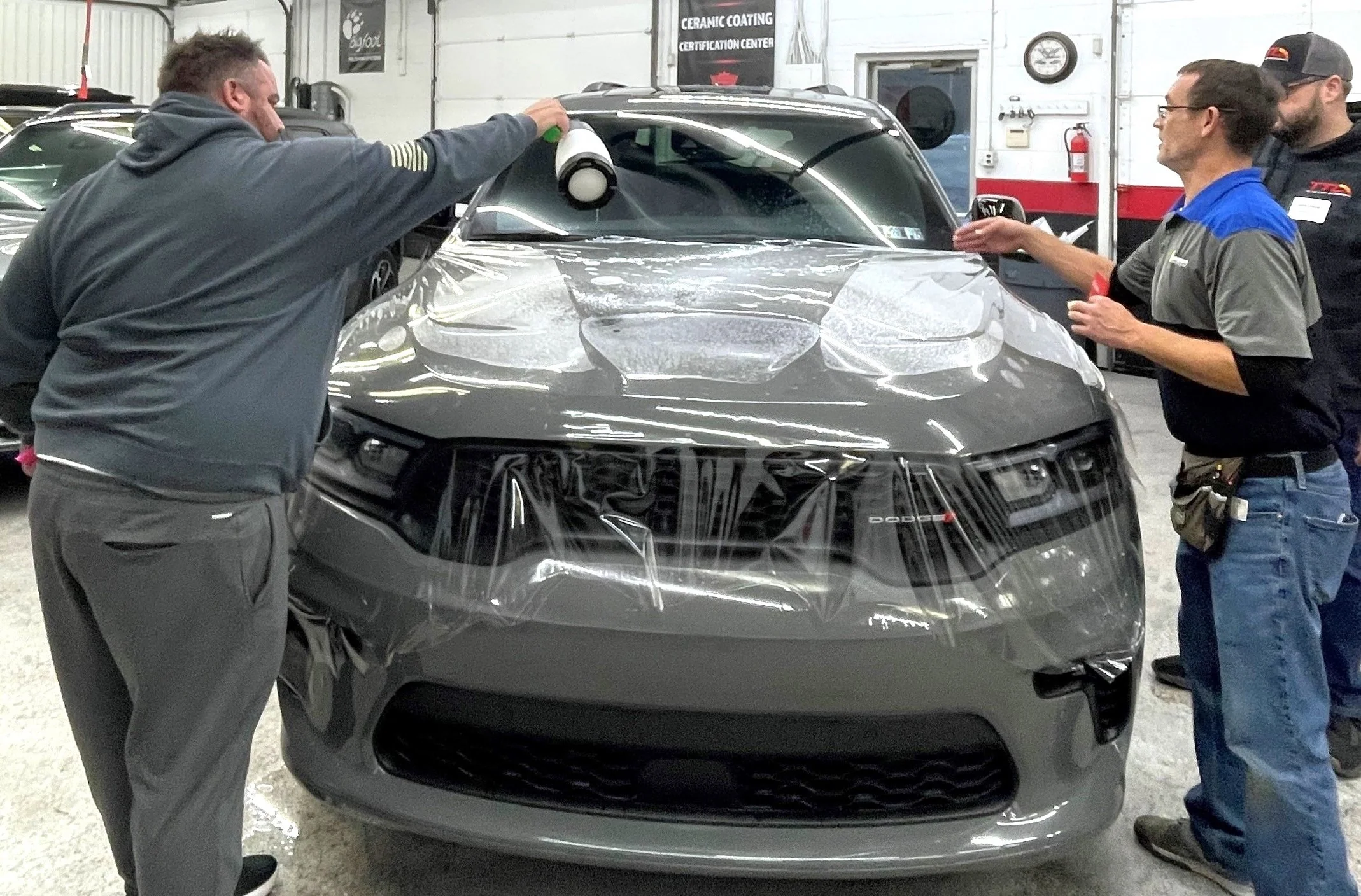
Paint protection film (PPF) installation has become one of the most valuable skills in the automotive appearance industry. Industry estimates place the U.S. PPF markets at approximately USD 105 million, while installation services can range from USD 1,000 to more than USD 6,000 per vehicle.
As demand continues to grow, technicians who can deliver clean, professional installations are well-positioned to build rewarding careers.
Professional PPF training programs provide the practical experience needed to develop those skills. Through structured instruction, hands-on practice, and real-world application, students learn everything from surface preparation and film handling to advanced installation techniques and quality control.
This guide explores how PPF training helps technicians build confidence, improve precision, and prepare for successful installations in professional settings.
How PPF Training Builds Foundation Skills
The first day of professional PPF training typically focuses on understanding the materials, tools, and preparation methods that form the foundation of every successful installation.
Understanding PPF Materials and Properties
PPF is made from thermoplastic polyurethane (TPU), a material that behaves very differently from vinyl. TPU offers superior flexibility, impact resistance, and self-healing capabilities, allowing it to absorb minor impacts while maintaining a smooth finish.
Training programs expose students to a variety of film technologies, including gloss finishes, matte films, and advanced self-healing products.
As technicians work directly with these materials, they gain practical experience with protection systems designed to support long-term vehicle preservation.
For those looking to build professional installation skills, programs such as the ID Protection training course provide hands-on instruction that helps technicians understand film behavior, adhesive performance, stretching limits, and proper installation methods in real-world applications.
Students learn how adhesive strength affects different panel types, how heat affects film flexibility, and how to avoid overstretching, which can compromise performance. Understanding these fundamentals helps prevent costly installation errors and improves long-term results.
Learning Tool Selection and Usage
Professional PPF installation requires specialized equipment. During training, students become familiar with the tools used daily by experienced installers, including:
- Squeegees: Available in various sizes and levels of stiffness to remove moisture and air while securing film to surfaces.
- Heat Guns: Used to soften film for complex curves, edge wrapping, and activating self-healing properties.
- Spray Bottles: Filled with slip and tack solutions to allow accurate film positioning and adhesion control.
- Precision Cutting Tools: Used for trimming around mirrors, door handles, and other detailed areas.
- Microfiber Towels: Lint-free cloths used for cleaning and moisture removal throughout the installation process.
Training programs provide extensive practice with professional-grade equipment. Instructors demonstrate proper squeegee angles, pressure techniques, and heat management methods.
Too much pressure can damage film, while too little can leave moisture and air trapped beneath the surface.
Similarly, improper heat application can weaken adhesive performance or distort the film. Repeated practice helps students develop the consistency and control needed for professional installations.
Developing Proper Preparation Techniques
Surface preparation is one of the most important steps in PPF installation. Even the highest-quality film will struggle to perform if applied to a poorly prepared surface.
The process typically begins with a thorough wash using pH-balanced automotive shampoo to remove dirt and surface contaminants. Clay bar treatment follows to remove embedded debris such as industrial fallout and brake dust.
Polishing helps eliminate minor imperfections that would otherwise remain visible beneath the transparent film while creating a more uniform surface for adhesion. Finally, technicians perform an isopropyl alcohol wipe-down to remove polishing oils and residue before installation begins.
PPF certification programs guide students through every stage of this process. They learn how to identify contamination under proper lighting, correct surface defects, and prepare vehicles to professional standards. These skills play a major role in preventing bubbling, lifting, and premature film failure.
The Hands-On Learning Environment in Professional PPF Classes
Professional PPF training programs prioritize practical learning over classroom lectures. Students spend most of their time actively working with film under the guidance of experienced instructors.
Small Class Sizes for Individual Attention
Many PPF training programs limit class sizes to between three and six students per instructor. These smaller groups allow instructors to observe each student’s technique closely and provide personalized feedback.
Because PPF installation requires precision, immediate correction is valuable. Instructors can quickly identify issues with film positioning, stretching techniques, squeegee usage, or heat application before those habits become ingrained.
Smaller classes also maximize hands-on practice time. Students spend more time installing film and less time waiting for equipment or instructor availability. This accelerates skill development and helps build confidence more quickly.
Instructor-Led Demonstrations
Every new technique is demonstrated before students attempt it themselves. Instructors perform installations on real vehicle panels while explaining each step of the process.
Students observe how experienced installers position film, manage tension, wrap edges, and solve common installation challenges. This approach allows them to see professional methods in action before applying those techniques independently.
Many instructors bring years of industry experience to the classroom. Their practical knowledge helps students understand not only how to install film but also how to improve efficiency, reduce material waste, and anticipate challenges before they occur.
Training often covers both entry-level and advanced applications, including bumpers, mirrors, door handles, and other complex vehicle surfaces.
Immediate Feedback on Your Work
One of the greatest benefits of professional training is real-time feedback.
Instead of waiting until a project is complete, students receive guidance while they work. If a bubble forms beneath the film, the instructor can identify the cause immediately. If heat application is inconsistent, corrections can be made before the issue affects the finished result.
Students repeat techniques until they demonstrate consistent execution. Areas that require additional practice receive focused attention, helping build confidence and stronger installation habits.
Many training providers also offer ongoing support after course completion. This allows graduates to ask questions and seek guidance as they begin working on customer vehicles and encounter new installation challenges.
Day-by-Day Skill Development in Multi-Day Programs
Most multi-day PPF training programs follow a structured progression that mirrors the workflow technicians encounter in professional shops.
Day One: Core Installation Fundamentals
The first day introduces students to PPF fundamentals, installation theory, software systems, pattern-cutting tools, and surface preparation techniques.
Students learn about film characteristics, application methods, solution mixing, and proper squeegee usage. Pattern alignment, positioning, and trimming techniques are also covered.
Hands-on exercises focus on simpler panels that help students develop confidence while learning the fundamentals of film handling, edge wrapping, and contamination prevention.
By the end of the day, students have a solid understanding of how PPF behaves and how professional installations are performed.
Day Two: Advanced Techniques and Complex Panels
The second day introduces more challenging applications.
Students learn how to install film on mirrors, bumpers, door edges, and other complex surfaces. These areas require greater control, precision, and understanding of film behavior.
Advanced stretching techniques, edge tucking methods, and troubleshooting procedures become a major focus. Students practice correcting bubbles, lifting edges, and contamination issues while learning how to maintain film integrity during installation.
Heat management skills become increasingly important as technicians learn to conform film to intricate shapes without damaging the material.
As confidence grows, students begin working on larger sections and refining their installation efficiency.
Day Three: Full Installations and Quality Control
The final day focuses on complete installations and professional quality standards.
Students often practice bulk installation techniques, working directly from film rolls rather than relying exclusively on precut patterns. This requires a deeper understanding of panel contours, tack points, trimming methods, and workflow management.
Full hood and fender installations provide an opportunity to apply everything learned throughout the course.
Quality control becomes a key focus. Students learn how to inspect finished work, identify imperfections, and verify proper adhesion before delivering a vehicle to a customer.
Many programs conclude with a practical assessment or certification exam that evaluates installation quality and overall competency. Successful graduates receive a certificate of completion and leave with the skills needed to begin performing professional PPF installations.
Conclusion
Professional PPF training programs provide far more than technical instruction. They create an environment where technicians can develop practical skills through guided practice, direct feedback, and real-world application. From understanding film properties and mastering preparation techniques to completing full vehicle installations, each stage of training builds confidence and capability.
As demand for paint protection services continues to grow, technicians who invest in quality training are better prepared to deliver consistent, professional results. Strong fundamentals, hands-on experience, and continued practice remain the key ingredients for producing the factory-quality finishes that customers expect and value.

At Engrnewswire, we are passionate about helping brands grow through smart SEO, GEO, and AEO strategies, supported by High-quality backlinks. With over 2k+ contributor accounts worldwide. We ensure your content reaches the right audience while building lasting authority.