
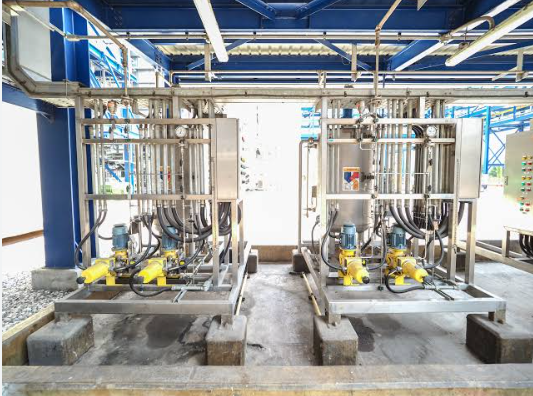
Selecting an industrial pump is a system-design decision, not simply an equipment purchase. Whether the application involves water transfer, process circulation, wastewater, or chemical injection, the pump must match actual operating conditions. Facility teams comparing options can learn more about industrial pump solutions, but the selection should always begin with verified process data. A pump that is too small may fail to deliver the required flow or pressure. A pump that is too large can waste energy, create excessive vibration, require constant throttling, and wear components prematurely. The goal is to identify a practical duty point where the pump, piping, controls, and fluid all work together.
Why Pump Selection Starts With System Demand
Define the system’s needs during normal, minimum, and peak operations. Flow rate describes the volume of liquid moved over time. Pressure is the force per unit area at a point in a system. Total dynamic head combines static lift, friction losses, valve losses, equipment resistance, and required discharge pressure into a single pumping requirement. The U.S. Department of Energy provides guidance for facilities seeking to match pumps to system requirements, reduce unnecessary energy use, and assess pumping-system performance. Measured pressure and flow readings are generally more useful than assumptions based on an aging pump or an incomplete process drawing.
Step 1: Identify the Fluid
Before comparing pump types, record the liquid’s operating properties. A clear, ambient-temperature water application is very different from a hot caustic solution, a thick polymer, an abrasive slurry, or a gas-containing wastewater stream. These details influence wetted materials, elastomers, seal design, impeller geometry, motor power, and operating speed. A pump built for clean water, for example, may clog, corrode, or lose performance quickly when used with slurry or concentrated cleaning chemicals.
Step 2: Calculate Flow Rate and Total Head
Establish the required flow in gallons per minute, gallons per hour, or another consistent unit. Then account for elevation change, pipe diameter and length, fittings, valves, filters, heat exchangers, and discharge pressure. Together, these losses form the system curve, which shows how required head changes as flow changes. Do not choose a pump based on connection size alone. A larger pipe connection does not guarantee a higher usable flow rate, and a smaller pump can sometimes meet demand more efficiently when pipe losses and operating conditions are properly calculated.
Step 3: Compare Common Pump Types
Centrifugal Pumps
Centrifugal pumps use a rotating impeller to move liquid and are commonly used for circulation, transfer, boosting, and higher-volume clean-fluid duties. They often perform well where flow is relatively steady, and the liquid is not excessively viscous.
Positive Displacement Pumps
Positive displacement pumps move a defined volume with each cycle or rotation. They are often a better fit for viscous fluids, controlled delivery, higher-pressure duties, and processes that need repeatable flow at changing pressure conditions.
Other Useful Designs
- Diaphragm pumps: Often used for chemical transfer and metering because the fluid can remain isolated from the drive components.
- Peristaltic pumps: Useful for abrasive, shear-sensitive, or contamination-sensitive fluids because the liquid contacts only the tubing.
- Submersible pumps: Suitable where the equipment must operate below the liquid surface, such as sumps, pits, and lift stations.
When Chemical Dosing Needs Extra Control
Chemical dosing requires more precision than general liquid transfer. The system must account for minimum and maximum dose rate, chemical concentration, injection-point pressure, pulsation, calibration requirements, and the control signal that adjusts the dose. For example, a water-treatment process may feed a small, steady amount of disinfectant. In contrast, a larger process system may automatically adjust chemical feed according to measured flow, pH, conductivity, or residual concentration.
- Confirm the minimum, normal, and maximum dose rate.
- Measure back pressure at the injection point.
- Verify compatibility for all wetted parts and seals.
- Select manual, pulse, proportional, or automated control as needed.
- Provide safe calibration, containment, and chemical-handling procedures.
Material Compatibility, Seals, and Suction Conditions
Material selection should consider chemical concentration, temperature, pressure, and exposure time. Stainless steel, engineered plastics, coated metals, specialty alloys, and different elastomers can all be appropriate, but none is universally compatible. Confirm compatibility data before ordering, particularly for oxidizers, solvents, acids, and high-temperature fluids. Also, review the net positive suction head (NPSH). Poor suction conditions can cause cavitation, noise, vibration, unstable flow, and damage. Common causes include long or undersized suction piping, clogged strainers, low tank levels, excessive inlet elbows, high fluid temperature, and excessive pump speed.
Energy Use, Controls, and Installation
A pump usually operates most economically when its normal duty point is near its best efficiency point. Correct motor sizing, variable-speed drives, pressure sensors, and automatic controls can reduce throttling losses and help the system respond to changing demand. Installation details matter just as much. Support piping independently so the pump casing does not carry pipe weight. Provide proper alignment, a stable base, adequate electrical supply, ventilation, isolation, and check valves where appropriate, instrumentation, and sufficient room for inspection or seal replacement.
Maintenance and Lifecycle Planning
Review maintenance requirements before purchase. Operators should be able to inspect seals, lubricate bearings when applicable, replace wear parts, and access spare components without major disruption. Track flow, suction and discharge pressure, motor current, vibration, and operating temperature. Changes in these readings can reveal blockage, wear, air entry, misalignment, or a process change before a failure occurs.
A Simple Pump Selection Worksheet
- Application description and duty cycle
- Fluid, concentration, temperature, viscosity, solids, and gases
- Minimum, normal, and peak flow requirements
- Total head, discharge pressure, and suction conditions
- Wetted materials, seals, motor voltage, and available power
- Control, automation, maintenance, and spare parts requirements
Final Selection Checklist
- Define the fluid and real operating conditions.
- Calculate flow and total dynamic head.
- Choose pump types that suit the duty.
- Verify materials, seals, temperature limits, and NPSH.
- Review energy use, controls, installation, and service access.
- Confirm final performance against the manufacturer’s pump curve.
Choosing the right industrial pump is about matching equipment to the real job. Careful review of flow, pressure, fluid behavior, chemical compatibility, suction conditions, controls, and maintenance needs can prevent leaks, wasted energy, poor process control, and unplanned shutdowns.
Conclusion
The best industrial pump is one that matches the actual process requirements, fluid characteristics, hydraulic conditions, and maintenance needs. By evaluating these factors before purchase, facilities can improve reliability, control operating costs, and reduce the risk of premature equipment failure. A system-focused approach also helps ensure that the selected pump continues to perform efficiently as operating conditions and production demands change. Careful attention to flow, total head, suction conditions, materials, seals, controls, energy use, and service access can also prevent common problems such as cavitation, excessive wear, leaks, and inefficient operation. Ultimately, thoughtful pump selection gives facilities a more dependable system, easier maintenance, and better long-term value.
