
Your home’s electrical system rarely fails without leaving clues first. A flickering light, a warm outlet, or a breaker that keeps tripping may seem minor, but these signs can indicate loose connections, overloaded circuits, worn components, or damaged wiring that warrant prompt attention.
For homeowners facing recurring issues, electrical repair Kansas City, MO services from Fusion Electric can help identify the cause rather than simply mask the symptom. Based in Overland Park, Fusion Electric is a licensed and insured provider serving the Kansas City metro, including Lee’s Summit, Johnson County, and Wyandotte County, with residential troubleshooting for issues such as flickering lights, dead outlets, breaker problems, wiring damage, and panel repairs.
Why Small Electrical Clues Matter
Electrical problems can develop behind walls, inside outlets, or within a panel long before a major failure becomes visible. That is why homeowners should pay attention to unusual sights, smells, sounds, and heat. A light that flickers for several weeks, for example, might be caused by a loose bulb, but it could also signal a loose connection that worsens over time. Electrical distribution and lighting equipment remain a significant source of residential fire risk, so early action is usually safer and less expensive than waiting.
Flickering Or Dimming Lights
Start with simple checks: ensure the bulb is secure and compatible. If only one light flickers, the bulb, fixture, or switch may be the cause. Flickering across multiple rooms or dimming when high-demand appliances start indicates circuit issues, such as overloads, loose wiring, a failing breaker, or neutral problems. Widespread flickering isn’t a DIY fix; an electrician should test the circuit to identify if it’s an isolated issue or part of a larger problem.
Warm, Discolored, Or Loose Outlets
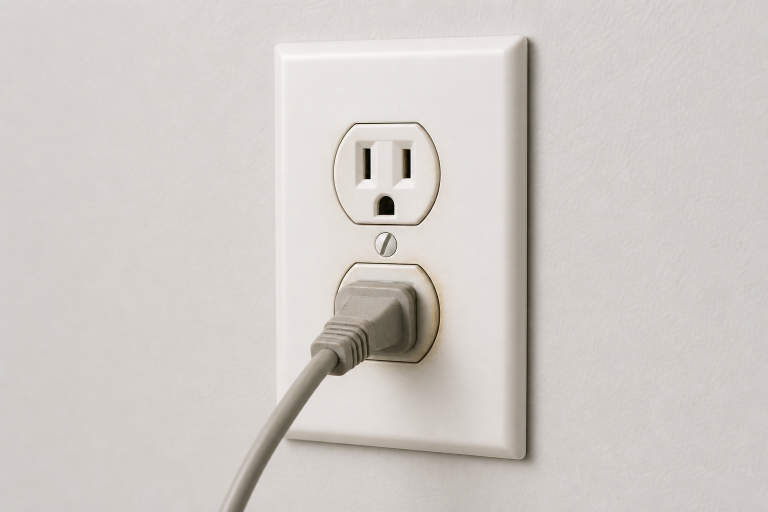
An outlet or switch plate should not feel hot during normal use. Stop using it if you notice brown or black marks, melted plastic, a burning odor, crackling sounds, or plugs that slip out easily. A loose receptacle can cause poor contact, which can generate heat and lead to arcing.
Do not cover damage with tape, a replacement faceplate, or a power strip. The room-by-room electrical safety checklist from the U.S. Consumer Product Safety Commission is a useful way to spot visible hazards around the home.
Breakers That Trip Again And Again
A breaker trip is a safety response, not merely an inconvenience. It may be reacting to an overloaded circuit, a short circuit, a ground fault, damaged appliance wiring, or a worn breaker. Unplug the smaller devices on the affected circuit and reset the breaker once. If it trips again, leave it off and arrange for an inspection.
Never repeatedly force a breaker back on. Call a professional promptly if the panel feels warm, smells hot, makes noise, shows corrosion, or has visible damage.
Buzzing, Crackling, And Unusual Odors
Electrical systems should operate quietly. Buzzing, humming, popping, or crackling near an outlet, switch, fixture, or breaker panel can indicate a loose connection, damaged wiring, or arcing. Keep a safe distance and do not remove a panel cover or touch exposed wiring.
A burning-plastic, fishy, or ozone-like smell also needs quick attention. Stop using the nearby device or outlet. Unplug an appliance only if it is safe to do so, and turn off the affected circuit if you can clearly identify it. If there is smoke, flame, or a strong, ongoing burning smell, leave the home and call 911. Never use water on an energized electrical fire.
Missing Or Faulty GFCI Protection
A ground-fault circuit interrupter, or GFCI, shuts off power quickly when it detects an electrical imbalance that could cause shock. GFCI protection is especially important in bathrooms, kitchens, garages, laundry rooms, and outdoor areas where water may be present.
Test these outlets monthly by pressing the test button to confirm that the power turns off, then press reset to restore power. If the outlet will not trip, reset, or remain on, it needs attention. Guidance on testing GFCI outlets and breakers can help homeowners understand the basic process, but replacement or wiring repairs should be left to a qualified electrician.
Older Wiring And Modern Power Demands
Older homes were often designed for fewer appliances and devices than households use today. Two-prong outlets, frequent extension-cord use, outlet adapters, aluminum wiring, knob-and-tube wiring, and too few receptacles are all reasons to consider an electrical inspection.
Modern loads such as EV chargers, heat pumps, home offices, and large entertainment systems need proper circuit planning. A panel upgrade is not automatically the answer. A qualified electrician should first identify the actual limitation, whether it is branch wiring, circuit capacity, a damaged component, or the electrical service.
What Homeowners Can Check Safely
- Look for scorch marks, melted plastic, damaged cords, or crushed cable sections.
- Listen for unusual sounds near outlets, switches, fixtures, and the panel.
- Check whether plugs fit firmly in outlets.
- Test accessible GFCI outlets using the test and reset buttons.
- Note which appliances cause dimming lights or breaker trips.
- Record when the problem happens and what was running at the time.
Do not open electrical panels, pull outlets from walls, splice wires, or work on energized circuits.
A Simple 2026 Electrical Safety Routine
- Monthly: Test GFCIs and check for loose or warm receptacles.
- Seasonally: Inspect outdoor lighting, cords, and weather covers.
- After storms or flooding: Avoid using wet electrical equipment until it is inspected.
- Before buying a home: Request an electrical inspection, particularly for an older property.
Common Questions Homeowners Ask
Is A Single Flicker Always Dangerous?
No. One brief flicker may be a bulb issue or a utility event. Repeated flickering, especially across multiple rooms, should be investigated.
Can A Homeowner Replace A Circuit Breaker?
Panel work can expose people to serious shock hazards, even when the main breaker is off. It is best handled by a qualified electrician.
How Often Should Electrical Systems Be Inspected?
It depends on the home’s age, condition, remodeling history, and warning signs. Older homes and recently purchased homes may benefit from an inspection sooner.
Conclusion
Flickering lights, warm outlets, strange sounds, repeated breaker trips, and unusual odors are your home’s way of signaling that something needs attention. Act early, avoid risky repairs, and call a licensed electrician when the cause is not clearly limited to a loose bulb or a damaged plug.
