
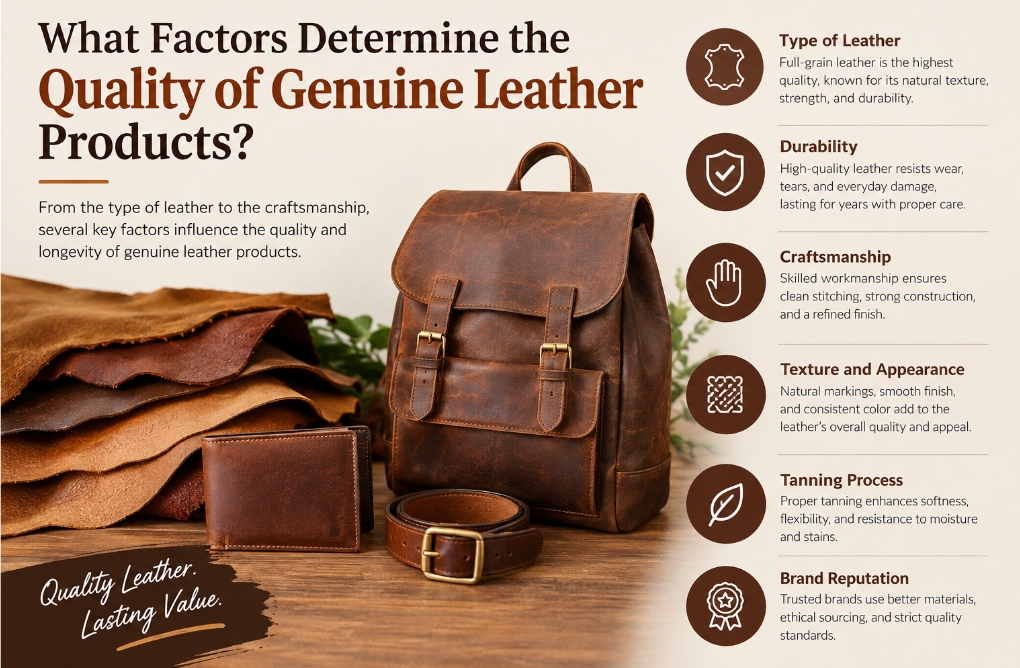
“Genuine leather” gets slapped on everything from a $40 wallet to a $400 jacket, which tells you almost nothing useful on its own. Two products may have the same label and yet have completely different performance over time. You have to completely ignore that word “genuine” and concentrate on the elements that differentiate a great thing from a bad one that will last a lifetime versus one that will crumble after just a year.
Where Does the Hide Actually Come From?
Quality starts before tanning ever begins. The animal’s living conditions, diet, and the region it’s raised in all affect the hide’s fiber density and natural resilience. High quality leather comes from hides from well-managed, healthier sources, which results in more durable and consistent leather, while leather from mass-farmed leather is not always of high quality and may not be consistent at all. This invisible starting point is one that most buyers don’t consider, however it can impact everything that follows, before the hide ever gets to a tannery.
How Much of the Hide Layer Is Actually Used?
This is the one thing most beginners don’t consider. Full grain leather utilizes all of the leather of the hide, including any imperfections, and retains the highest strength and natural character of the leather. Top grain sands off, leaving a more even surface. Though the name, “genuine leather” is usually a result of using lower, weaker layers of the hide and coating them to appear superior. The more important piece of information than the word “genuine” on a tag is the knowledge of which layer the piece is being purchased.
What Tanning Method Was Used?
The process of tanning turns hides into raw leather and the process is very significant. A slower and more labor-intensive process, vegetable tanning can create leather with a longer lifespan that’s rich in texture and grows more beautiful with age. This tanning process is fast and less expensive, but it may result in less durability in leather with time. That’s why reputable makers are clear about the method they use; it’s so it can have a direct impact on the final quality.
How Consistent Is the Stitching?
Flip any leather product over and examine the stitching closely. Even, tight, consistent stitches with proper thread tension indicate precision detailing and real attention during construction, not something rushed off an assembly line to hit a quota. Loose threads, spacing inconsistencies or seams that appear to have been sewn too quickly are first indications of a product that was made quickly and not with quality or durability in mind, and stitching is almost always the first failing point in a poorly made product.
What’s Actually Holding the Hardware in Place?
Buckles, zippers, and clasps are frequently the weakest link in leather goods, regardless of how good the hide itself is. Quality makers have additional stitching or riveting at the hardware attachment points to spread stress rather than focus it on one weak seam. Cheap pieces or poorly attached to good leather will fail long before the leather does!
Does the Edge Finishing Show Real Craftsmanship?
Edge finishing is one of the most reliable, and most overlooked, quality indicators. Smooth, sealed or burnished edges that don’t fray over time are good signs of a well-made leather good. Even if the leather is fairly good, poorly finished edges that are left raw or poorly cut will fray, curl, and will deteriorate in a noticeable way. A little comment on a lot of quality.
How Was the Leather Actually Sourced and by Whom?
At some point, quality stops being just about the material and becomes about accountability: who’s actually standing behind the product. A collection like Alaskan leather jackets built by skilled workshops with proven industry experience reflects a level of oversight that anonymous mass manufacturing simply can’t guarantee, because every step from hide selection to final stitch is handled by people who can be held responsible for the outcome, not an assembly line optimized purely for speed.
Does It Actually Hold Up Under Real Daily Use?
The clearest test of genuine quality isn’t how something looks on a shelf; it’s how it performs after months of real use. A premium leather backpack USA makers construct with reinforced seams and properly finished edges should show minimal wear after regular daily carry, not early fraying or stretched stitching. If a product can’t survive ordinary use without visible damage within the first few months, no amount of marketing language changes what that says about its actual construction quality.
Does Quality Have to Come with an Inflated Price?
That’s the one thing most buyers don’t realize when they realize all that: High quality does not mean high price. Much of the high cost of leather goods is really retail mark-up, brand and marketing expense, and not necessarily related to the quality of the hides, the process of tanning them, or the quality of the stitching. When a manufacturer decides to invest in the physical elements that make an item a quality leather good, not the name on the label, then it is possible to have genuinely affordable leather.
The Bottom Line
There actually is a list of specific things to look for that you can check to determine if it’s real leather or not, hide sourcing, grain layer, tanning process, stitching consistency, hardware reinforcement, and edge finishing. When you know the signs to look for, there’s no need to guess when you know the price tag needed to get this right is not high. When you are next considering a “genuine leather” product, ignore the label and take advantage of these factors. As it is, that’s what the difference is between purchasing something that will last and purchasing something that will simply claim to. And it’s a habit you need to get into in all your purchases from now on.
